Fly Agaric
Amanita Muscaria

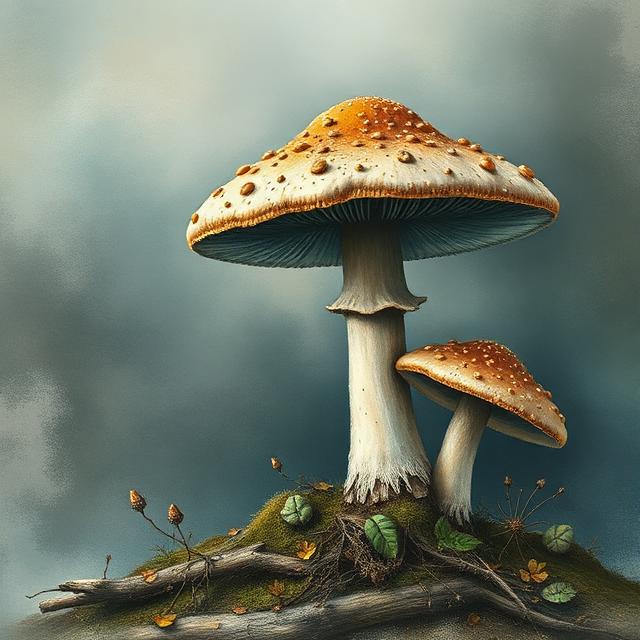
Amanita muscaria, commonly known as the fly agaric, is a distinctive mushroom characterized by its bright red cap adorned with white spots. The cap can reach up to 20 cm in diameter and is typically hemispherical before flattening out. The gills are white and free from the stem, while the stem is white to yellowish, bulbous at the base, and features a ring. The mushroom is known for its psychoactive properties and is often found in coniferous and deciduous forests.
In Europe and Russia, the primary use of Amanita muscaria was medicinal. The mushroom would typically be soaked in alcohol and blended into tinctures and applied topically. As recently as the 1980s, Russians and Ukrainians in the Sukhodol River Valley relied on home preparations of fly agaric to treat joint ailments. In the 1990s, the Karelian people of Northwest Russia were documented crafting oral remedies from Amanita caps for headaches and stomachaches. Beyond medicine and healing, traditional cultures have also relied upon Amanita muscaria for its perception-altering, mood-changing qualities. The Khanty people of Siberia have long upheld traditions of singing heroic epic songs, consuming Amanita muscaria extract before their performance to help elicit courage, reduce inhibition, and lower anxiety. The release of inhibition also appears to be an important factor in shamanic use of this mushroom. Khanty shamans traditionally consumed Amanita muscaria to help facilitate otherworldly journeys, but also to overcome fears or anxiety about meeting spiritual entities.
Distribution:
Amanita muscaria is a cosmopolitan mushroom, native to conifer and deciduous woodlands throughout the temperate and boreal regions of the Northern Hemisphere, including higher elevations of warmer latitudes in regions such as Hindu Kush, the Mediterranean and also Central America. In North America, it is native to parts of Alaska, and occurs alongside imported European trees near the West Coast. A recent molecular study proposes that it had an ancestral origin in the Siberian–Beringian region in the Tertiary period, before radiating outwards across Asia, Europe and North America.
Hardiness zones: USDA 3-7
Parts used: Only the hat is dried and used topically as a ticture or as a tea.
Active substances: Muscimol
Medicinal uses: Modern-day pharmacological studies and anecdotal reports from users suggest that the mushroom has analgesic (pain-relieving), anti-inflammatory, anxiolytic (anxiety-soothing), neuroprotective, and stimulant properties. A new generation of researchers now recognize that the mushroom holds an array of potentially therapeutic benefits, with one team of mycologists recently reflecting: Amanita muscaria offers а great versatility of beneficial effects in cell protection and especially in neuroprotection, cardio protection, hepatoprotection, inflammation process, oxidative stress, and may even contribute to development of new drugs in the future.
Evidence level: Moderate